ACE Mission Command™ is the framework that underpins our approach to defence capability development. It organises training into three connected levels (strategic, operational, and tactical) and supports them with specialised programmes, giving governments a coherent and repeatable structure for building and sustaining their forces.

The framework is designed to be adopted in full or in part. Clients may implement the complete structure, or select the programmes that address their most immediate requirements, with the assurance that each component fits within a consistent whole.

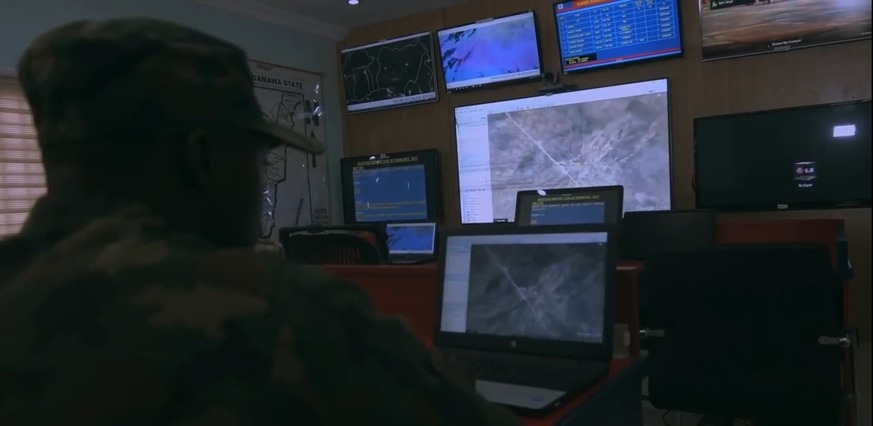
Military officer monitoring satellite imagery and situational displays in an operations command centre

One Framework for Defence Capability:

Capability programmes frequently under-deliver because levels of command are developed in isolation. Senior leaders are trained in one way, field commanders in another, and specialist units in a third, leaving gaps in understanding where decisions are made and carried out. Mission Command™ addresses this directly. By developing each level within one framework, it ensures that intent set at the top is understood, adapted, and executed at every level below.

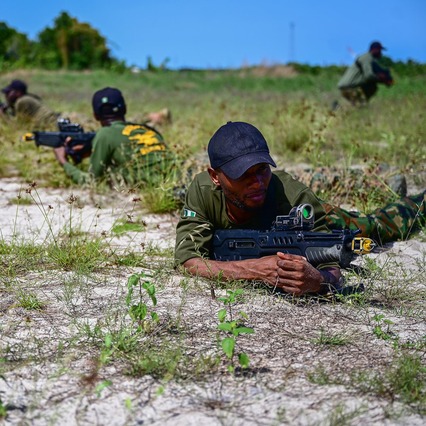
Trainees advancing in prone positions during a field training exercise

The framework combines three levels of command with specialised programmes that address the distinct requirements of different mission areas. Together they provide breadth across the force and depth where it is most needed.

  • Strategic Leadership Development
  • Command and Control
  • Counter-Terrorism
  • Special Operations
  • Aviation, Maritime and Naval Programmes
  • Explosive Ordnance Disposal (EOD)

The modular design of Mission Command™ allows programmes to be phased in line with a client’s priorities, budget, and absorptive capacity. Early modules can establish a common foundation, with specialised programmes added as the force matures. This phased approach reduces implementation risk and allows progress to be measured at each stage.

Three Levels of Command:

Mission Command™ develops capability at each level at which an armed force operates. Every level carries its own objectives, competencies, and responsibilities, yet all are designed to connect. The result is a force in which strategy, planning, and action are aligned, and in which each level understands the role and requirements of the others.

Why a Framework Matters:

A common framework brings consistency to how a force is trained, led, and assessed. It gives institutions a shared language, simplifies the integration of new programmes, and provides a stable basis for measuring progress. For governments, it converts a series of separate training activities into a coherent capability development strategy.